Sacred Jyotirlinga Guide
Omkareshwar Temple: The Sacred OM Island of Lord Shiva
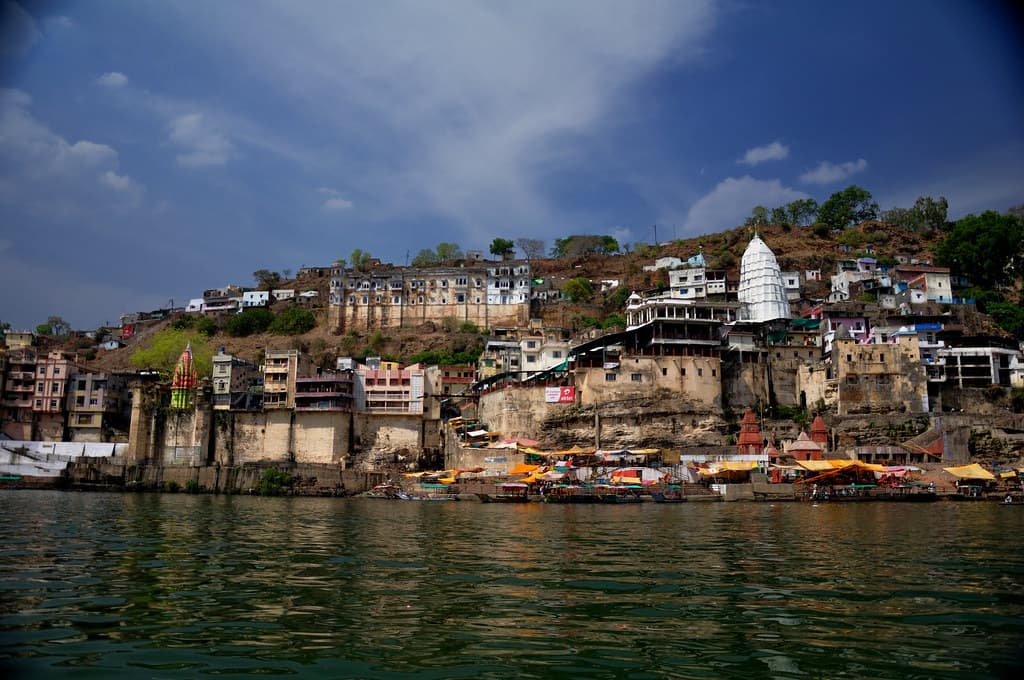
Where the Narmada River embraces Mandhata Island in the divine shape of OM, twin Jyotirlingas await—Omkareshwar and Amareshwar. Journey through ancient parikrama routes, cave shrines, and riverbank rituals in one of India's most geometrically sacred pilgrimage sites.
At a Glance
- Deity: Lord Shiva (Twin Jyotirlingas: Omkareshwar & Amareshwar)
- Sacred Geography: OM-shaped Mandhata Island formed by Narmada River
- Key Experience: 7 km parikrama around island with cave temples and ghats
- Main Rituals: Jalabhishek, Narmada aarti, island circumambulation
- Ideal Season: October – March; Mahashivratri for festival immersion
Travel Intelligence
- Air: Indore Airport (77 km, 2 hours) with luxury transfers
- Rail: Omkareshwar Road Station (12 km) or Indore Junction
- Accommodation: Riverfront heritage stays, boutique guesthouses
- Duration: 2–3 days for complete temple circuit and parikrama
Every trip starts with a full day of rest. We keep you in one place for several nights when we can — slow travel, not temple sprints.
Signature
from $1,199 per person, two sharing
- · boutique 4–5★ stays
- · private car and driver throughout
- · your dedicated guide, airport to airport
- · rest day on arrival, quiet temple windows
A fully private Reserve tier arrives after our founding season.
Solo traveller supplement +35% · Quiet season (April–September) −15% · International flights not included
Riverfront heritage accommodations and premium transfers
Price Guide (USD)
Maha Shivaratri is special here — book 4+ months ahead. Off-season: Jul–Sep.
* Prices in USD per guest (twin share). Indicative seasonal estimates — final quotes vary with dates and group size.
Sacred Origins & Twin Manifestations
According to the Shiva Purana, the Vindhya mountains performed intense penance to surpass the mighty Himalayas. Pleased with this devotion, Lord Shiva manifested in two forms on opposite banks of the Narmada: Omkareshwar on the northern island shore and Amareshwar on the southern mainland—creating the only twin Jyotirlinga pilgrimage in Shaiva tradition.
The Mandhata Island's natural OM shape (ॐ), visible from the Gauri Somnath hilltop viewpoint, is considered a divine geographical blessing. The syllable OM represents the primordial sound of creation—thus, circumambulating this island is equivalent to chanting the sacred mantra with every step. Ancient texts describe how sages including Narada, Kanad, and Markandey performed tapas in the island's caves, absorbing the cosmic vibrations emanating from the twin Jyotirlingas.
Timeline of Devotion and Architecture
Ancient & Paramara Period
Vedic references to Omkar Kshetra date back thousands of years. The present temple structure showcases 12th-century Paramara dynasty architecture with intricate Nagara-style shikhara, ornate pillars, and detailed stone carvings depicting Shiva's cosmic dance and Puranic episodes.
Medieval Additions & Modern Access
Successive Holkar rulers of Malwa patronized the temple complex, adding ghats, pavilions, and subsidiary shrines. The 20th-century bridge connecting the island to the mainland eased pilgrim access while preserving the traditional boat crossings to Amareshwar that many devotees still prefer for spiritual authenticity.
Architectural Highlights & Sacred Spaces
The Omkareshwar Temple rises five stories with a towering Nagara shikhara crowned by a golden kalash. The sanctum sanctorum houses the Jyotirlinga in traditional square garbha-griha surrounded by intricate mandapa columns showcasing celestial dancers, divine couples, and Shaiva iconography. The Sabha Mandap features 12 pillars representing the twelve Jyotirlingas, while the outer walls display exquisite stone lattice work typical of Paramara craftsmanship.
The island parikrama route connects numerous sacred sites: Siddhanath Temple with its geometric precision, Gauri Somnath perched on the hilltop offering panoramic OM-shape views, and the Kedareshwar Cave Temple where natural rock formations become objects of worship. Along the ghats, ancient stone steps descend into the Narmada, where pilgrims perform ablutions before darshan.
The Sacred Parikrama Experience
The 7-kilometer circumambulation of Mandhata Island is considered as meritorious as visiting all twelve Jyotirlingas. Begin at dawn from the main temple, proceeding clockwise along the riverbank path. The route takes 2-3 hours at a meditative pace, passing through:
- Siddhanath Temple: 10th-century shrine with intact architectural brilliance
- Kedareshwar Cave: Natural cave temple emerging from riverside cliffs
- Gauri Somnath Hill: Climb 250 steps for the OM-shape island view
- Riverside Ghats: Multiple bathing platforms with ancient lingas
- Meditation Caves: Small grottos where sadhus still practice tapas
Our Soul Navigators coordinate early morning parikrama starts, provide historical context at each shrine, and arrange rest stops with traditional refreshments along the sacred circuit.
Ritual Cadence & Festival Calendar
- Mahashivratri: The most significant festival with all-night jagaran, special alankars, and lakhs of devotees performing abhishek with Narmada water.
- Shravan Month: Every Monday witnesses special puja, Rudrabhishek, and continuous chanting of OM Namah Shivaya throughout the island.
- Kartik Purnima: Thousands of diyas illuminate the Narmada ghats, and devotees perform parikrama under the full moon.
- Nag Panchami: Snake worship rituals at the island's Naga shrines with milk offerings and traditional dances.
- Daily Aarti: Morning Mangala Aarti (5:00 AM) and evening Sandhya Aarti (7:00 PM) at both Omkareshwar and Amareshwar temples, plus riverbank Narmada aarti at sunset.
Pilgrim Etiquette & Practical Wisdom
Dress & Temple Protocol
Traditional attire (dhoti-kurta for men, saree for women) is recommended for sanctum entry. Remove footwear at designated areas. Photography is restricted inside the garbha-griha. Maintain silence during aarti and abhishek ceremonies.
Parikrama Tips
Start early (5:00-6:00 AM) to avoid midday heat. Wear comfortable walking shoes. Carry water bottle and sun protection. Take rest at designated spots. Complete the circuit before 11:00 AM for optimal experience. Local guides available for historical insights.
Extend Your Sacred Circuit
Amareshwar Temple
Cross Narmada by boat (10 minutes) to visit the twin Jyotirlinga on the southern bank, completing the dual darshan pilgrimage.
Maheshwar
Sacred Narmada town 65 km away with Ahilya Fort, ancient ghats, and exquisite Maheshwari handloom heritage (1.5 hours).
Mahakaleshwar Ujjain
Another Jyotirlinga 135 km away famous for Bhasma Aarti—combine for powerful two-Jyotirlinga pilgrimage (3 hours).
Frequently Asked Questions
- Why is Omkareshwar considered unique among the twelve Jyotirlingas?
- Omkareshwar is the only Jyotirlinga manifested in twin forms—Omkareshwar on Mandhata Island and Amareshwar across the Narmada on the southern bank. The island's natural OM shape, visible from elevated viewpoints, is considered a divine geographical blessing.
- What is the significance of the parikrama around Mandhata Island?
- The 7-kilometer parikrama (circumambulation) around the OM-shaped island is considered highly auspicious. Pilgrims encounter ancient cave temples, riverbank shrines, meditation spots used by sages, and complete the spiritual circuit connecting with both Jyotirlingas. The walk typically takes 2-3 hours and is best undertaken during early morning or late afternoon.
- Should I visit both Omkareshwar and Amareshwar temples?
- Yes, visiting both twin Jyotirlingas completes the pilgrimage. Omkareshwar is on the island (accessible by bridge or boat), while Amareshwar requires crossing the Narmada via boat. Many devotees visit Omkareshwar first, then cross to Amareshwar for a comprehensive darshan.
- What are the key rituals and best darshan timings?
- Plan for early morning darshan (5:00-7:00 AM) for Mangala Aarti and peaceful atmosphere. Offer Jalabhishek with Narmada water, perform the island parikrama, and attend the evening Narmada aarti at sunset. Mahashivratri witnesses elaborate celebrations with all-night jagaran and special alankars.
- When is the best time to experience Omkareshwar?
- October to March offers pleasant weather ideal for parikrama and outdoor rituals. Mahashivratri (February-March) sees grand celebrations with devotees from across India. Shravan Mondays attract special puja offerings. Avoid monsoon season (July-September) when river levels rise and boats may be suspended.
Craft Your Omkareshwar Pilgrimage with Ease
Our Soul Navigators choreograph serene darshan timings, guided parikrama with historical context, riverfront heritage stays, and sacred Narmada aarti experiences so you can surrender fully to the twin Jyotirlingas' divine presence.