Pillar Guide
Kashi Vishwanath Temple: The Luminous Heart of Varanasi
Standing on the western banks of the Ganga, the Vishweshwara Jyotirlinga has drawn seekers for millennia. Use this guide to weave legends, rituals, and modern planning into a seamless, soul-nourishing pilgrimage.
At a Glance
- Deity: Vishweshwara (Lord Shiva)
- Significance: First-manifested Jyotirlinga granting liberation and spiritual merit
- Must-visit companion shrine: Kaal Bhairav Mandir (Kotwal of Kashi)
- Key rituals: Mangala Aarti, Jalabhishek, evening Ganga Aarti, Shringar Gauri darshan
- Ideal season: October – March; Shravan Mondays for advanced devotees
Travel Intelligence
- Air: Lal Bahadur Shastri International Airport (25 km) with luxury meet-and-greet
- Rail: Varanasi Cantonment & Kashi Junction with executive lounge access
- Accommodation: Palace heritage stays, boutique ghatside haveli residencies
- Duration: 2–3 nights to absorb ritual cadence and curated excursions
Sacred Origins & Living Legends
According to the Kashi Khanda, Vishweshwara manifested as an endless column of light to resolve a cosmic dispute between Brahma and Vishnu. Varanasi thus became the first Jyotirlinga — a place where Shiva grants moksha, blowing the liberation mantra into the ears of devotees who pass within its precincts. Saints from Adi Shankaracharya to Swami Vivekananda, Guru Nanak, and Ramakrishna Paramhansa have walked these lanes, attesting to its universal embrace.
Tradition prescribes visiting Kaal Bhairav first to seek the Kotwal’s permission, before offering prayers at Vishwanath, Annapurna Devi, and the Vishalakshi Shakti Peeth. A single darshan here is said to equal all twelve Jyotirlinga pilgrimages — a testament to the temple’s luminous stature in Shaiva cosmology.
Timeline of Continuity and Resilience
Ancient & Medieval
First recorded in the Skanda Purana, the Adi Vishveshwar temple weathered multiple invasions, with the Jyotirlinga safeguarded in the Gyanvapi well during iconoclastic waves. Devotees continued to gather around remnants, keeping the flame alive.
Maratha Revival & Modern Corridor
Maharani Ahilyabai Holkar rebuilt the present sanctum in 1780, later embellished with Maharaja Ranjit Singh’s gold-plated domes. Management shifted to a state trust in 1983 under the Kashi Naresh, and the Kashi Vishwanath Dham Corridor (2019–21) now eases the flow between temple and Manikarnika Ghat, restoring hidden shrines en route.
Architectural Notes & Symbolism
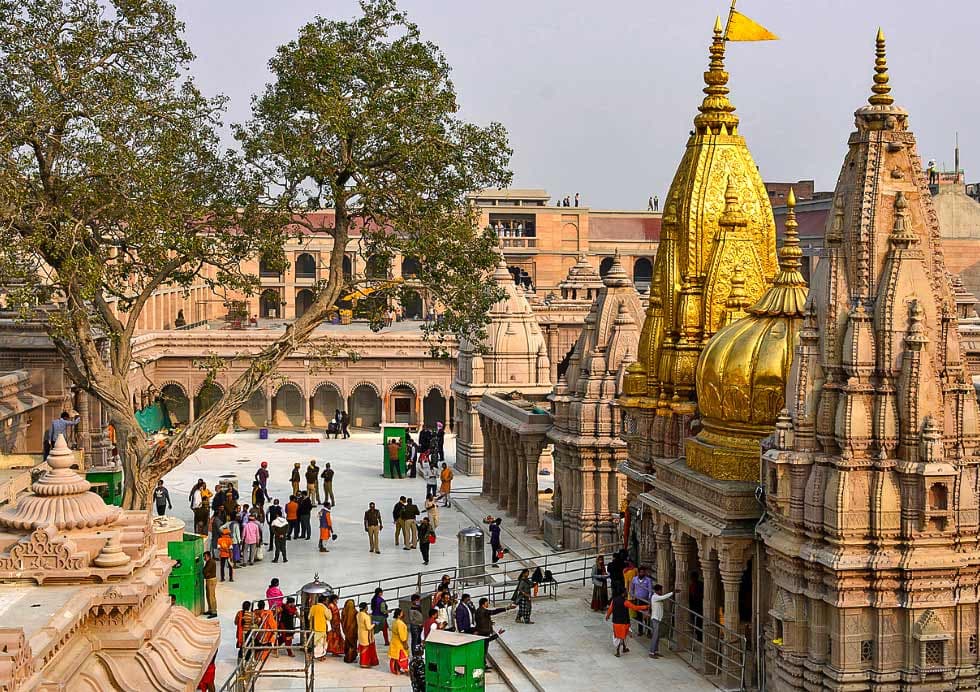
The mandir’s Nagara shikhara rises 15.5 metres, crowned by three gold-clad domes and a trident bearing flag. Within the silver-plated Garbha Griha, the Jyotirlinga embodies the cosmic mandala: square base for Brahma’s realms, octagonal mid-section for Vishnu’s directions, and cylindrical summit denoting Shiva’s completion of the cycle.
Surrounding shrines honour Avimukteshwara, Kala Bhairava, Vishnu, Ganesh, Annapurna Devi, and the ancient Gyanvapi well where the lingam was once concealed. Outside, the Naubatkhana and colonnades commissioned between 1785 and 1840 frame the temple approach.
Ritual Cadence & Festival Calendar
- Shravan Mondays: Elaborate alankars honour Shiva and Parvati, culminating in Ardhanareshwar adornment.
- Mahashivratri: Kashi Naresh performs the chief rituals before general darshan, symbolising the city’s royal guardianship.
- Dev Deepawali: Over one million diyas illuminate the ghats on Kartik Purnima, celebrating the gods’ descent to bathe in the Ganga.
- Rangbhari Ekadashi: Marks Shiva’s return with Parvati; damroo rhythms fill the Vishwanath lanes in pre-Holi celebration.
- Bhairav Ashtami: Devotees seek protection from Kaal Bhairav, the Kotwal, reaffirming Varanasi’s spiritual security.
- Makar Sankranti: Devotees take the first auspicious dip of the year in the Ganga, offer kites to the sun, and line up for Vishwanath darshan under the watch of solar mantras.
- Annakoot: Fifty-six bhogs are offered as a mountain of prasad recalling Krishna’s Govardhan lila before distribution to pilgrims.
- Akshaya Tritiya: The trust organises charitable food and gold donations while devotees queue to invoke Lakshmi’s abundance alongside Shiva’s grace.
Pilgrim Etiquette & Practical Wisdom
Dress & Conduct
Adhere to the dhoti-kurta / saree dress code for Sparsh Darshan. Jewellery and phones are stored in secure lockers prior to entry. Align mindset with humility — darshan lines move swiftly when energy stays composed.
Sequencing Tips
Begin at Kaal Bhairav, proceed to Vishwanath, Annapurna Devi, and Vishalakshi. Schedule Ganga Aarti boat vantage, add Sankat Mochan for Hanuman blessings, and reserve a guided walk through the Vishwanath Gali for artisan encounters.
Extend Your Circuit
Manikarnika Ghat
Witness the 24-hour cremation rituals symbolising liberation, accompanied by nuanced cultural briefings.
Sarnath Excursion
Trace Buddha’s first sermon at Dhamek Stupa, balancing Shaiva devotion with Buddhist insight.
Kaal Bhairav Mandir
Offerers present liquor and sweets to the guardian deity, seeking safe passage through Kashi’s sacred circuits.
Frequently Asked Questions
- Why is Kashi Vishwanath considered the most significant Jyotirlinga?
- Varanasi is believed to be the first Jyotirlinga to manifest. Tradition states that a single darshan here confers the merit of visiting all other Jyotirlingas, making Vishweshwara the spiritual nucleus of Shaiva worship.
- What rituals or darshans are essential during a visit?
- Plan for Mangala Aarti (3:30 AM) or Saptarishi Aarti (7:30 PM), perform Jalabhishek with Ganga water, and conclude with the evening Ganga Aarti at Dashashwamedh Ghat. Add Shringar Gauri and Annapurna Devi darshans for a complete circuit.
- What is the recommended dress code for Sparsh Darshan?
- Men must wear dhoti-kurta and women saree to enter the sanctum for Sparsh Darshan. Devotees in western attire can offer prayers from outside the Garbha Griha.
- Which nearby shrines should I include in the Kashi circuit?
- Begin with Kaal Bhairav Mandir (the Kotwal of Kashi), then proceed to Vishwanath, Annapurna Devi, Vishalakshi Shakti Peeth, Manikarnika Ghat, and Sankat Mochan Hanuman Temple for a balanced itinerary.
- When is the best time to experience Kashi Vishwanath Temple?
- October to March offers pleasant weather. Key festivals include Mahashivratri, Shravan Mondays, Dev Deepawali, Rangbhari Ekadashi, and Bhairav Ashtami when the temple is richly adorned.
Craft Your Kashi Pilgrimage with Ease
Our Soul Navigators choreograph private aartis, scholar-led walkthroughs, heritage stays, and mindful cuisine so you can surrender fully to the luminous presence of Vishweshwara.