Pillar Guide
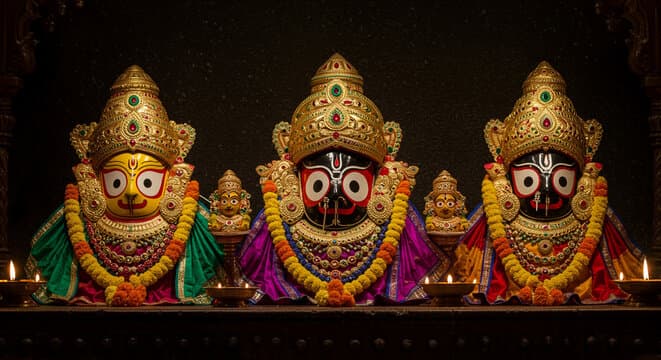
Jagannath Puri Temple: The Lord of the Universe
On the sacred shores of the Bay of Bengal, Lord Jagannath reigns as the cosmic deity embracing all beings. Journey through ancient mysteries, magnificent rituals, and spiritual traditions that have drawn seekers for millennia.
At a Glance
- Deity: Lord Jagannath (Vishnu), Balabhadra, and Subhadra
- Significance: Eastern anchor of Char Dham pilgrimage, granting moksha through divine darshan
- Must-experience: Rath Yatra festival, Mahaprasad blessed by Lakshmi, evening aarti
- Key rituals: Snana Purnima bathing ceremony, Nabakalebara renewal, Chandan Yatra, 18 daily besha
- Ideal season: October – March; Rath Yatra in June-July for devotees seeking spiritual energy
Travel Intelligence
- Air: Biju Patnaik International Airport (60 km) with luxury coastal transfers
- Rail: Puri Railway Station (2 km from temple) with executive lounge access
- Accommodation: Beachfront luxury resorts, heritage properties with temple proximity
- Duration: 3–4 nights to experience temple rituals, Konark excursion, beach serenity
Divine Mysteries & Timeless Legends
According to the Skanda Purana, Lord Vishnu appeared in his Nila Madhava form to King Indradyumna in a divine vision. The king searched tirelessly until discovering the deity manifesting from a sacred Neem tree. When attempts to carve the idol proved futile, Lord Vishnu himself appeared as the celestial carpenter Ananta Maharana, completing the iconic wooden forms of Jagannath, Balabhadra, and Subhadra in secrecy.
The unique feature of the deities — their incomplete forms with large eyes and no hands — symbolizes the transcendence of conventional representation. Jagannath means "Lord of the Universe," encompassing all forms of divinity. Saints like Ramanujacharya, Jayadeva, and Chaitanya Mahaprabhu have been transformed by darshan here, establishing Puri as a beacon of Bhakti tradition where caste distinctions dissolve before the universal Lord.
Timeline of Divine Manifestation
Ancient Origins
The temple's origins trace to the 8th century CE, though legend places worship much earlier. King Anantavarman Chodaganga Deva constructed the present structure in the 12th century, establishing the elaborate ritual system that continues today. The temple has withstood invasions, with devotees safeguarding the deities through centuries.
Living Traditions
The Gajapati King of Puri continues as the first sevak, ceremonially sweeping the chariot during Rath Yatra. The temple maintains 36 traditional crafts, from wooden idol carving to intricate sand art. Every 12-19 years, the Nabakalebara ceremony renews the deities in new wooden forms, maintaining the sacred continuity across generations.
Architectural Marvel & Sacred Symbolism
The temple's Kalinga architecture rises 214 feet through its main shikhara, crowned by the Nila Chakra — a blue discus visible from miles away. The temple complex spans over 400,000 square feet, enclosed by high walls with four gates representing the four directions. The Meghanada Pacheri (outer wall) features 120 temples dedicated to various deities.
The Baisi Pahacha (22 steps) leads to the main sanctum where the trinity resides on the Ratna Simhasana (jeweled throne). The temple's kitchen, Rosaghar, is the world's largest with 752 earthen chulhas preparing Mahaprasad daily. Uniquely, the temple flag always flies against the wind, and no bird flies over the dome — mysteries that continue to inspire devotion and wonder.
Sacred Rituals & Festival Calendar
- Rath Yatra: The world-famous chariot festival in Ashadha (June-July) where three colossal chariots carry the deities to Gundicha Temple, symbolizing Krishna's journey to Mathura. Millions pull the ropes seeking divine blessings.
- Snana Purnima: The ceremonial bathing of deities with 108 pots of sacred water, after which they go into Anasara (seclusion) for 15 days to recover from ritual "fever."
- Nabakalebara: The rare ceremony when new wooden forms replace the deities, conducted only when two Ashadha months occur in a year. The old idols are buried in the temple's Koili Vaikuntha.
- Chandan Yatra: A 21-day summer festival where deity replicas are taken on decorative boats in Narendra Sarovar tank, offering respite from heat.
- Diwali at Puri: Uniquely celebrated as Kali Puja with goddess worship, complementing the Vaishnava tradition with Shakti reverence.
- Kartik Purnima: Devotees offer lamps by the sacred tank and take darshan during the illuminated evening aarti.
- Makar Sankranti: Special bhogs and sankranti rituals mark the sun's northward journey, with devotees seeking blessings for prosperity.
Pilgrim Etiquette & Practical Wisdom
Dress & Conduct
Conservative dress is mandatory — no shorts, sleeveless tops, or leather items. Remove footwear at the designated area and secure belongings. Photography is strictly prohibited inside the temple complex. Maintain reverence and follow the panda (priest) guidance for darshan protocols.
Darshan Strategy
Early morning (6-7 AM) offers shorter queues. The temple follows a strict daily ritual schedule with 18 besha (costume changes) and multiple bhoga timings. Book heritage passes or VIP darshan in advance for festivals. Always carry the Mahaprasad coupon from authorized counters.
Extend Your Sacred Circuit
Konark Sun Temple
Marvel at the UNESCO World Heritage chariot temple dedicated to Surya, showcasing exquisite Kalinga architecture 35 km from Puri.
Chilika Lake
Experience Asia's largest brackish water lagoon with migratory birds, dolphin sightings, and serene island temples.
Gundicha Temple
Visit the deities' aunt's temple where they reside for nine days during Rath Yatra, symbolizing familial bonds in divine narratives.
Frequently Asked Questions
- Why is Jagannath Puri considered one of the Char Dham?
- Puri represents the eastern anchor of the Char Dham pilgrimage circuit. Lord Jagannath, an incarnation of Vishnu, is believed to grant moksha to devotees who witness his darshan, making it essential for spiritual liberation in Hindu tradition.
- What is the significance of the Rath Yatra festival?
- The annual Rath Yatra sees Lord Jagannath, along with siblings Balabhadra and Subhadra, journey to the Gundicha Temple on massive wooden chariots. This nine-day festival symbolizes the deity's visit to his birthplace and attracts millions of devotees who pull the sacred chariots.
- What is the Mahaprasad and why is it special?
- Mahaprasad is the sacred food offering prepared in the temple kitchen using earthen pots and traditional methods. It is believed to be blessed by Goddess Lakshmi herself and is offered to devotees regardless of caste or creed, embodying the principle of universal brotherhood.
- Are non-Hindus allowed inside the temple?
- The main temple sanctum is restricted to Hindus only. However, non-Hindus can witness the Rath Yatra festival and participate in various cultural activities around the temple. The Raghunandan Library rooftop offers a distant view of the temple complex.
- When is the best time to visit Jagannath Puri?
- October to March offers pleasant weather for temple visits. The Rath Yatra in June-July is the most auspicious time, though it draws massive crowds. Snana Purnima, Diwali, and Kartik month are also significant periods for devotees.
Craft Your Jagannath Puri Pilgrimage
Our Soul Navigators orchestrate exclusive darshan arrangements, heritage stays by the sea, Mahaprasad experiences, and immersive cultural encounters so you can fully embrace the divine presence of the Lord of the Universe.